Hydraulic Oil Cooler: The Ultimate Guide for Efficient Hydraulic Systems
Hydraulic systems are the backbone of modern industrial machinery, construction equipment, manufacturing plants, agricultural vehicles, and heavy-duty applications. One of the most important components that ensures the smooth operation of these systems is the hydraulic oil cooler. Without proper temperature control, hydraulic oil can overheat, leading to reduced efficiency, equipment failure, and expensive repairs.
In this comprehensive guide, we’ll explain everything you need to know about hydraulic oil coolers, including how they work, their benefits, different types, maintenance tips, and how to choose the right one for your hydraulic system.
What Is a Hydraulic Oil Cooler?
A hydraulic oil cooler is a heat exchanger designed to remove excess heat from hydraulic oil. During machine operation, hydraulic fluid absorbs heat generated by pumps, motors, valves, and friction between moving components. If this heat is not removed, the oil temperature increases, reducing lubrication quality and damaging system components.
Hydraulic oil coolers help maintain the ideal operating temperature, ensuring maximum efficiency, longer equipment life, and reliable performance.
Why Hydraulic Oil Temperature Matters
Hydraulic oil performs several important functions:
- Lubricates moving parts
- Transfers hydraulic power
- Protects against corrosion
- Reduces friction
- Removes contaminants
However, excessive heat negatively affects these functions.
Problems Caused by Overheated Hydraulic Oil
- Reduced oil viscosity
- Faster oil oxidation
- Seal damage
- Pump wear
- Valve malfunction
- Increased maintenance costs
- Reduced equipment efficiency
- Unexpected downtime
Maintaining oil temperature between 40°C and 60°C is generally recommended for most hydraulic systems.
How Does a Hydraulic Oil Cooler Work?
A hydraulic oil cooler works by transferring heat from hydraulic fluid to another cooling medium, usually air or water.
Basic Working Process
- Hot hydraulic oil enters the cooler.
- Heat transfers through cooling tubes or plates.
- Air or water absorbs the heat.
- Cooled hydraulic oil returns to the hydraulic system.
- The process repeats continuously during operation.
This cooling cycle prevents overheating while maintaining consistent hydraulic performance.
Types of Hydraulic Oil Coolers
1. Air-Cooled Hydraulic Oil Cooler
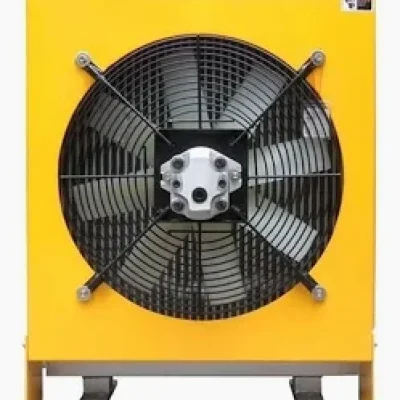
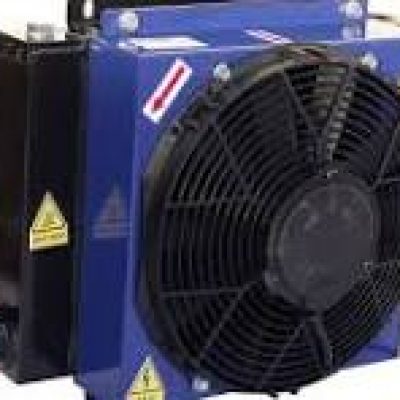
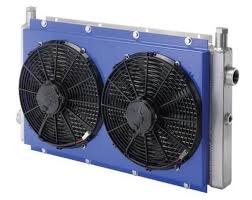
Air-cooled coolers use electric fans to blow air across cooling fins.
Advantages
- Easy installation
- Low maintenance
- No water supply needed
- Suitable for mobile machinery
- Energy efficient
Applications
- Excavators
- Cranes
- Agricultural machinery
- Forklifts
- Mobile hydraulic systems
2. Water-Cooled Hydraulic Oil Cooler
Water-cooled models circulate water through internal tubes to remove heat.
Benefits
- Higher cooling capacity
- Ideal for continuous industrial operations
- Stable cooling performance
- Compact design
Applications
- Manufacturing plants
- Steel industries
- Plastic injection molding
- Marine equipment
- Power generation
3. Plate Heat Exchanger
These use thin metal plates to maximize heat transfer.
Features
- High efficiency
- Compact size
- Fast cooling
- Low pressure loss
4. Shell and Tube Oil Cooler
A traditional industrial cooling solution where oil flows through tubes while cooling water circulates around them.
Ideal for:
- Large hydraulic systems
- Industrial processing plants
- Heavy machinery
Benefits of Using a Hydraulic Oil Cooler
Extends Equipment Life
Lower temperatures reduce wear on hydraulic pumps, cylinders, valves, and motors.
Improves System Efficiency
Cool oil maintains proper viscosity, ensuring smoother hydraulic operation.
Reduces Maintenance Costs
Less overheating means fewer component failures and reduced repair expenses.
Prevents Oil Degradation
High temperatures accelerate oil oxidation. A cooler slows this process significantly.
Increases Productivity
Machines operate continuously without overheating interruptions.
Protects Hydraulic Seals
Rubber seals last longer when exposed to stable temperatures.
Saves Energy
Efficient hydraulic systems consume less power.
Industries That Use Hydraulic Oil Coolers
Hydraulic oil coolers are widely used across numerous industries.
- Construction
- Agriculture
- Manufacturing
- Mining
- Marine
- Power plants
- Oil and gas
- Material handling
Construction equipment such as excavators, bulldozers, cranes, and loaders rely on hydraulic oil coolers for continuous operation. Manufacturing plants use them in hydraulic presses, CNC machines, and injection molding equipment, while agricultural machinery like tractors and harvesters also benefits from efficient cooling systems.
Signs Your Hydraulic System Needs Better Cooling
Watch for these common warning signs:
- Hydraulic oil exceeding recommended temperature
- Slow machine response
- Reduced lifting power
- Burnt oil smell
- Frequent oil replacement
- Pump noise
- Seal leakage
- System shutdowns
Ignoring these signs can lead to severe equipment damage.
How to Choose the Right Hydraulic Oil Cooler
Selecting the correct hydraulic oil cooler requires considering several factors.
Cooling Capacity
Choose a cooler that matches your system’s heat load.
Flow Rate
Ensure the cooler supports your hydraulic oil flow requirements.
Working Pressure
Verify maximum operating pressure compatibility.
Ambient Temperature
Hot environments require larger cooling capacity.
Installation Space
Compact plate coolers suit limited spaces.
Cooling Medium
Choose between air-cooled and water-cooled models depending on your application and operating environment.